
Introduction: Navigating Autism Support in York Region
If you are a parent searching for the best support for your child with Autism Spectrum Disorder (ASD) in York Region, you have likely encountered two primary, evidence-based paths: ABA Therapy vs Social Skills Training. The question of which is best for your child’s development is critical, and we aim to provide clarity with a compassionate and data-driven approach. ABA Therapy vs Social Skills York Region is not about choosing one over the other, but integrating them for success.
The truth is, both ABA Therapy and Social Skills Training are highly valuable. However, they serve different foundational purposes. At Blue Roses Autism Services, we believe the most successful path is found not in choosing one over the other, but in strategically integrating them to maximize progress and create lasting change.
This comprehensive guide breaks down each approach, helping you understand their core differences, and answering the critical question of ABA Therapy vs Social Skills Richmond Hill to help your child thrive in the community. This comprehensive guide breaks down each approach, helping you understand their core differences, and how they can be combined to help your child thrive in the GTA community, specifically within the diverse settings of York Region.
1-ABA Therapy: The Foundational Choice in the ABA Therapy vs Social Skills Richmond Hill Debate
Applied Behavior Analysis (ABA) is the most evidence-based intervention for individuals with autism globally. It is not just a program, but a scientific methodology used to understand how behavior works and how the environment affects it. It focuses on the principle that socially significant behaviors can be taught and refined through structured reinforcement.
The Core Function of ABA Therapy
- Primary Focus: To teach crucial socially significant skills and to decrease challenging behaviors that interfere with learning. This includes self-regulation and coping mechanisms.
- Methodology: Highly structured and data-driven (a key feature for OAP funding compliance), ABA breaks down complex skills into smaller, manageable steps (Discrete Trial Training or DTT), using positive reinforcement to encourage desired behavior. This rigorous data collection is key for tracking progress and optimizing therapy.
- Key Goals: Improving communication, language, and self-help skills (e.g., dressing, brushing teeth). Crucially, it builds prerequisite social skills (like joint attention and imitation) necessary before complex social interaction can occur.
Why ABA Must Come First
Imagine trying to teach a child algebra before they master addition. Similarly, Social Skills Training is often ineffective if a child cannot yet sit still, pay attention, or communicate basic needs. ABA Therapy creates that fundamental structure. It establishes the building blocks of communication and reduces intense, disruptive behaviours (like aggression or self-stimulatory behaviours) which often prevent a child from engaging in a social group setting.
For York Region Families: ABA is essential for creating the measurable, foundational changes required for long-term independence, especially as children transition into the school system. To explore personalized plans, visit our ABA Therapy Services page at [Insert Link to ABA Services Page].
2. Social Skills Training (SST): The Generalization Phase in ABA Therapy vs Social Skills Richmond Hill
Social Skills Training (SST) takes the established skills from ABA Therapy and focuses on the more complex, spontaneous, and nuanced aspects of human interaction. This is where children learn to generalize their skills outside of the structured therapy room.
How Does Social Skills Training Work?
- Primary Focus: Teaching specific, observable social behaviors required for successful peer and community engagement. This includes reading subtle cues and emotional reciprocity.
- Methodology: Often conducted in group settings (social skills groups) to simulate real-world scenarios. It frequently employs role-playing, video modeling, and social stories to practice complex skills in a safe environment.
- Key Goals: Learning to initiate conversations, understanding non-verbal cues (body language and tone), taking turns in play, managing conflict, and developing friendships.
The Importance of Generalization in York Region
The York Region is a diverse and busy environment. A child may know how to share with a therapist (a skill learned in ABA), but SST teaches them how to share with three different peers who all want the same toy at the same time in a Vaughan park. SST ensures the skills they learned are functional and sustainable across various contexts—home, school, and community.
Expert Tip: For further reading on the importance of evidence-based practice and certification in this area, consult resources at Autism Ontario.
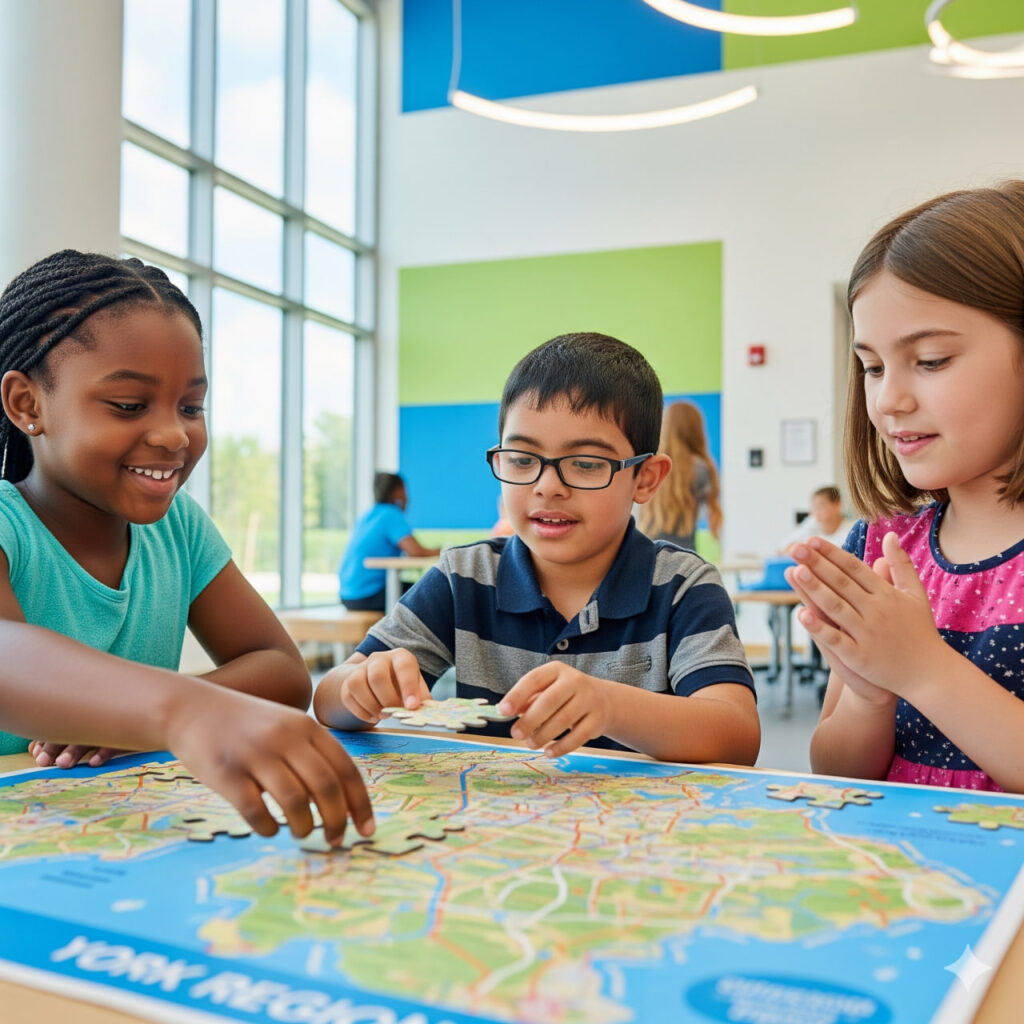
The distinction between these two powerful interventions is crucial for determining a personalized plan. Here is a clear snapshot of the ABA Therapy vs Social Skills Richmond Hill differences:
3. The Key Differences: ABA Therapy vs Social Skills Training
Understanding the distinction is vital for planning effective intervention for your child in York Region. Here is a comparative snapshot:
| Feature | ABA Therapy (The Foundation) | Social Skills Training (The Application) |
| Primary Goal Focus | Foundational Skills (Communication, Behavior Reduction, Compliance). | Advanced Skills (Peer Interaction, Group Play, Conflict Resolution). |
| Typical Setting | Often 1:1, In-Home, or Centre-Based (Structured). | Primarily in Group Settings or natural environments. |
| Best for Children with: | Significant communication deficits, intense challenging behaviors, or very young age (Early Intervention). | A good baseline of foundational skills but difficulties in peer situations (often older children or teens). |
4. The Blue Roses Humanized Approach: Integrating ABA and SST
The question should never be ABA Therapy vs Social Skills York Region—it must be how to use both effectively. Our integrated model is designed to support the whole family, from toddlers needing Early Intensive Behavioral Intervention (EIBI) to teens requiring complex social support.
Why Integration Leads to Success
- Assessment is Key: Our Board Certified Behavior Analyst (BCBA) team first conducts a thorough assessment. If a child’s main obstacle is aggressive behavior, the program will be 90% ABA initially. If a child is doing well but struggles at birthday parties, the program might be 50% ABA maintenance and 50% SST.
- Smooth Transition: We ensure a smooth transition of skills. A child who learns to greet an adult in a structured ABA setting is then gently moved to a social group where they practice that same greeting with multiple peers.
- Focus on Joy: Our integrated approach uses positive reinforcement (the core of ABA) to make the social interaction (SST) fun and rewarding. We aim for skills to be functional, joyful, and meaningful for the child and the family.
5. Frequently Asked Questions About Autism Support
Is ABA Therapy or Social Skills Training covered by the Ontario Autism Program (OAP)?
Yes. Both ABA Therapy and Social Skills Training services, when delivered by qualified professionals (like BCBAs or trained therapists), are eligible for funding through the Ontario Autism Program (OAP). As a provider in the York Region, Blue Roses Autism Services Inc. assists families in navigating the OAP process to ensure maximum utilization of funds.
What is the difference between In-Home and Centre-Based ABA Therapy in York Region?
Centre-Based ABA Therapy provides a structured, distraction-reduced environment ideal for intensive learning and establishing core skills. In-Home ABA Therapy allows children to practice skills—such as daily living routines, self-help, and family interaction—directly in their natural setting. The choice depends on your child’s needs and is part of the custom program design.
How long does it take to see results from an integrated ABA and SST program?
Progress varies for every child, but due to the data-driven nature of ABA Therapy, measurable progress reports are typically provided within the first 6-12 weeks. Significant developmental and behavioral improvements are often seen within 6 to 12 months of consistent, high-quality, integrated therapy. Consistency is the key to success.
Remember, the final choice regarding ABA Therapy vs Social Skills Richmond Hill should always be based on a comprehensive assessment by a qualified BCBA, ensuring your child receives the right intensity of support.
Conclusion: Ready to Start Your Child’s Integrated Program in York Region?
Don’t let the confusion between ABA Therapy vs Social Skills Training delay your child’s success. At Blue Roses Autism Services, we remove the guesswork by providing a unified, customized path for your family in the York Region. We serve Richmond Hill, Vaughan, Markham, and the entire Greater Toronto Area.
Contact us today to schedule your comprehensive assessment. We are dedicated to partnering with you to unlock your child’s full potential.